Thursday, August 3, 2023

Opinion | In Vietnam, Turning a Camera on the War - The New York Times


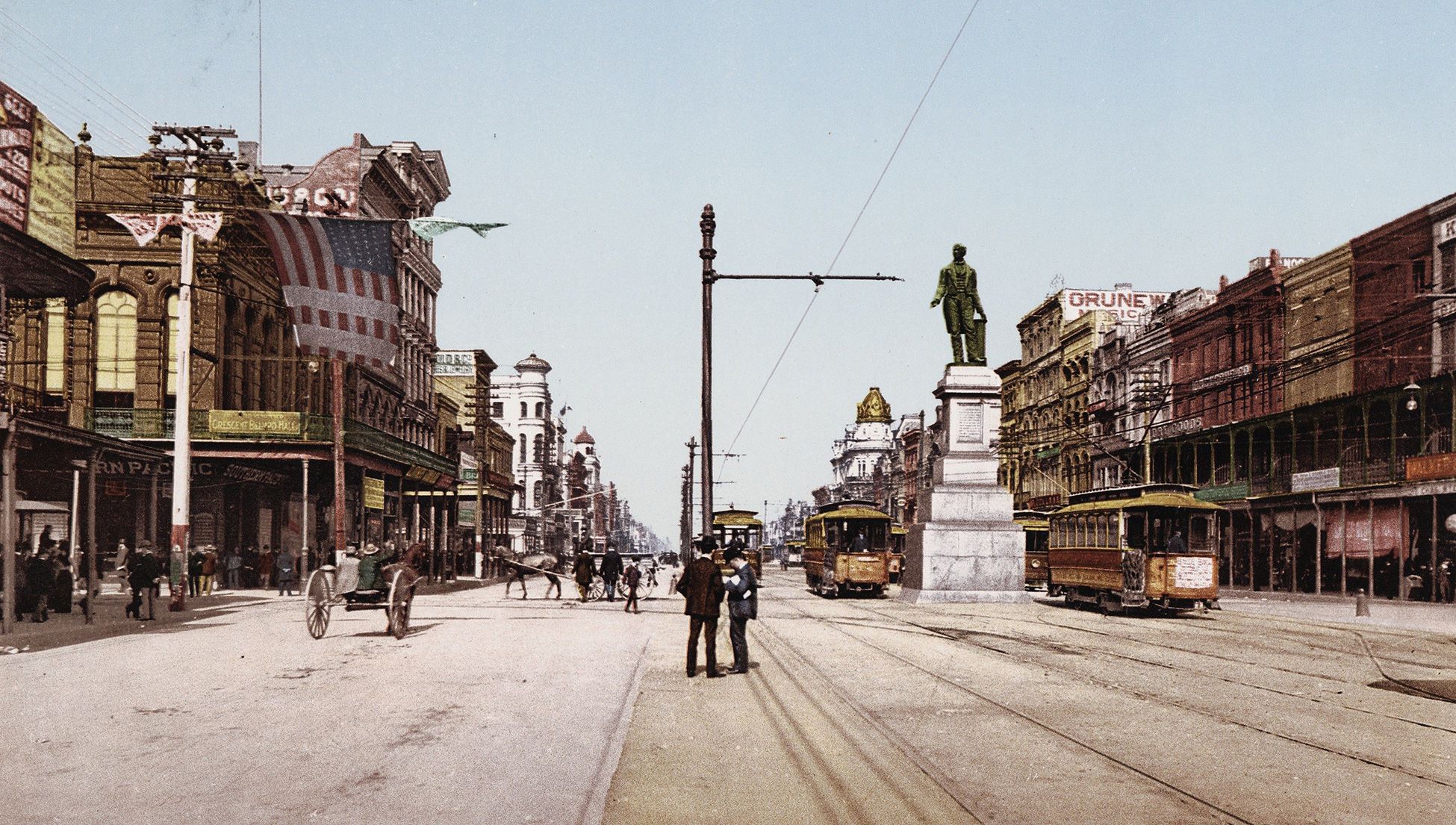
Horst Faas was an exceptional photographer who spent a significant amount of time in Vietnam. He was based in Saigon from 1962 to 1970 as an Associated Press photographer and regularly returned until the withdrawal of American forces in 1973. During his time in Vietnam, he witnessed and photographed some of the most significant moments of the war. Despite being heavily wounded just before the Tet offensive, he survived the war thanks to his fearlessness, Germanic common sense, good luck, and wry humor.

One of the things that set Faas apart from other photographers was his ability to adapt to the tough conditions of combat photography. He designed a waterproof aluminum case to protect his cameras and film, which also saved him from more serious injuries when he was hit by grenade fire in 1967. Instead of bemoaning the tough conditions, he adapted to them and continued to produce exceptional photographs.

However, what often rankled him were the ethical issues that lay at the core of combat photography. He was concerned about the appropriateness of depicting torture or the disequilibrium that came from being able to photograph only one side of the story. In a memo to the New York office of The A.P. early in 1964, he noted that photographers “could crawl to the forward trenches of a besieged outpost, wait beside riflemen in night ambushes, witness brutal interrogations and executions and merciless street fighting. While the enemy — the Vietcong and North Vietnam — operated in secrecy, American and allied troops and government civilians performed almost always under the probing eyes and lenses of newsmen.”

Faas was also known for searching out the best freelance photographers to supplement the output of A.P. staff photographers. He would hand out cameras to both local and foreign stringers, who became soldiers in “Faas’s Army.” He gave them equal chances and never played favorites. He also gave young freelancers opportunities, knowing that it would permit them to keep working and, more importantly, if they scored a major photographic coup, The A.P. would be the first place they would come.

Faas was a remarkable photographer who left an indelible mark on photojournalism. He had a tough job managing the bureau’s photographers while working as a photographer himself. However, he did it with aplomb, giving equal opportunities to all and never playing favorites.


Don’t Forget How Strange This All Is

Don’t Forget How Strange This All Is

bee and purple flower

Jerry Seinfeld joked that if aliens came to earth and saw people walking dogs, they would assume the dogs are the leaders. The dog walks out front, and a gangly creature trailing behind him picks up his feces and carries it for him.

Throughout my life I’ve had moments where I felt like one of these visiting aliens, where something I knew to be normal suddenly seemed bizarre. I remember walking home from somewhere, struck by how strange streets are: flat strips of artificial rock embedded in the earth so that our traveling machines don’t get stuck in the mud.

Everything else seemed strange too. Metal poles bending over the road, tipped by glowing orbs. Rectangular dwellings made of lumber and artificial rocks. The background noise is always the hum of distant traveling machines, and all of this stuff was built and operated by a single species of ape.


Don’t Forget How Strange This All Is

Friday, June 11, 2021

When the mind's eye is blind - Austin Kleon


“If you open your eyes and you take out a pencil and pad, how many people can draw what they see? The answer is a very small number, so if you can’t draw what is in front of you then why would we expect that you would be able to draw what you visualise?”

When the mind's eye is blind - Austin Kleon

Strolling Cities


Strolling Cities unveils the naked, materially seductive form of 9 Italian cities – Milan, Como, Bergamo, Venice, Genoa, Rome, Catania, Palermo – by means of millions of photos taken during the recent lockdowns (’20/’21) that show the urban space as an unfiltered landscape of walls, streets, and buildings. Returned to the immanence of their materiality, cities abandon their stereotyped semantic contents, to embrace a new dimension of extreme elusiveness. A generative A.I. model trained with these images creates perpetually moving video-paintings, whose indefinite contours suggest a potential transformation of urban places, once ascribed to specific social functions, into open spaces available to countless (re)writings.

Strolling Cities

Why your consciousness depends on the low-entropy early Universe | Psyche Ideas


Merlin remembered the future and anticipated the past. Benjamin Button aged backwards. These things are hard to imagine, but imagine something even stranger: someone whose life is like yours, but played fully in reverse, frame for frame. Merlin and Button both walk and talk normally. In contrast, if you record yourself and play it in reverse, you’ll see someone who walks backwards (without slipping) and talks backwards (without slipping up). What would it be like to be such a creature, a genuine time-reverse twin? Would such a twin feel the same as you’d feel if the rest of the world were running in reverse? Would she have experiences at all? And why does it matter?

Why your consciousness depends on the low-entropy early Universe | Psyche Ideas

Thursday, June 3, 2021

First issue of ‘Montclair Kids News’ is out | Montclair Local News


“Hello! If you’re reading this, congratulations! You’ve picked up the Montclair Kids News project,” reads the first sentence of the very first issue of Montclair Kids News, where, as the newspaper says, Montclair kids report the news. 

Over the last few months, a group of 47 aspiring writers from elementary and middle schools across town wrote about their life during the coronavirus pandemic. They wrote about their experiences with virtual learning and advice on coping with COVID-19 for kids. They penned poems and created recipes to make delicious cupcakes and a signature pesto pasta. One student even wrote about his leprechaun sighting in Montclair.

First issue of ‘Montclair Kids News’ is out | Montclair Local News

Friday, April 2, 2021

10 commercials made by famous directors


From David Lynch to Ridley Scott: 10 commercials made by famous directors


It was Andy Warhol who said, “Being good in business is the most fascinating kind of art. Making money is art and working is art and good business is the best art.” This was an opinion propagated in a rather more applied sense by one of his New York contemporaries Keith Haring, who said, “If commercialism is putting my art on a shirt so that a kid who can’t afford a $30,000 painting can buy one then I’m all for it.” In a strange way, an advert to a director is like a T-shirt to a painter, in the most ambiguous way possible it both literally and figuratively works as a shop front.